Root canal treatment: preserving a natural tooth
A straightforward guide to the purpose of root canal treatment and the care that follows.
Why might it be recommended?
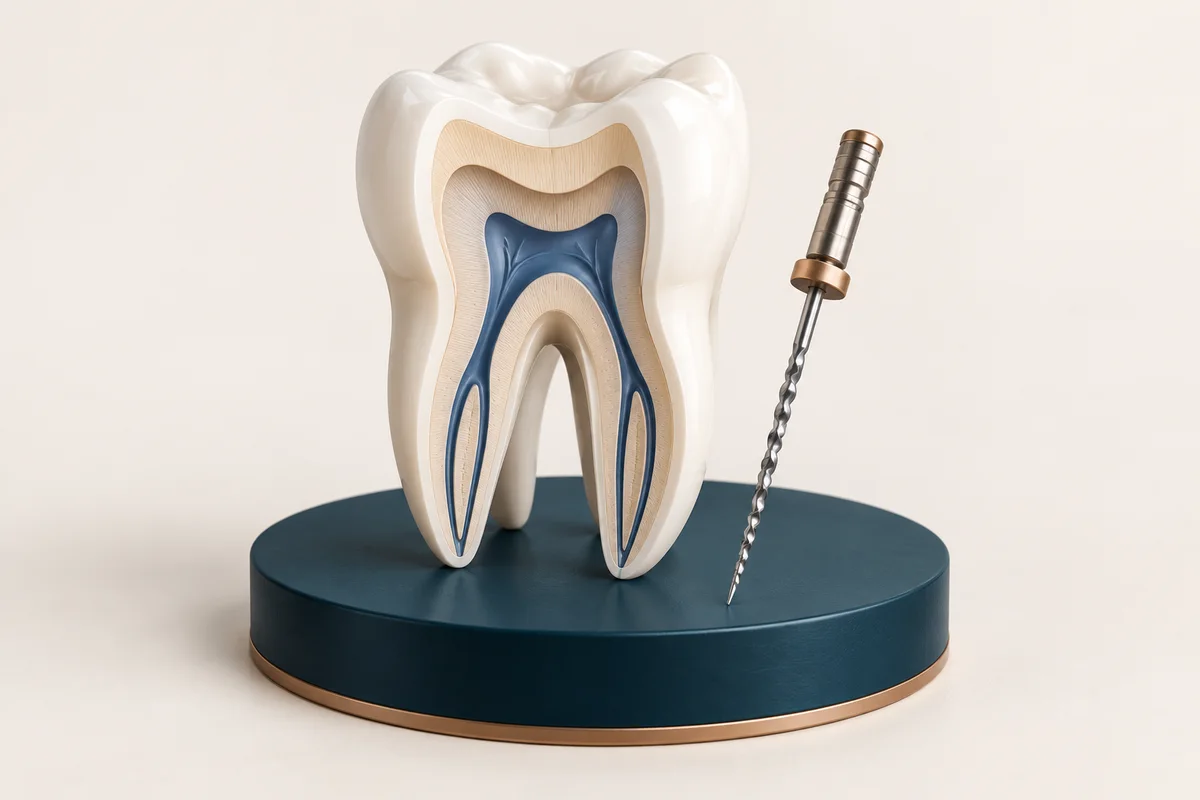
Inside a tooth is soft tissue called the pulp, containing nerves and blood vessels. Deep decay, cracks and other problems can inflame or infect it. Root canal treatment removes affected tissue, cleans the canals and seals them, aiming to retain the natural tooth when appropriate.
What happens during treatment?
Local anesthesia is generally used to help control pain. The dentist cleans and shapes the canals before filling and sealing the tooth. Treatment may require more than one appointment, with a temporary filling between visits. The number of visits depends on the tooth rather than a fixed promise before examination.
Finishing treatment matters
The tooth may need a final restoration or crown depending on its condition. Attend follow-up visits; relief from pain does not mean every stage of treatment is complete. Some discomfort can occur afterwards, so discuss symptoms and aftercare instructions with your dentist.
Ask whether the tooth can be restored, what alternatives exist and which steps remain. A description of pain alone cannot determine whether root canal treatment is needed or guarantee its outcome.
Questions about your dental health?
Contact the clinic to discuss your needs. Emergency warning signs require immediate medical care.